The Homeowner’s Guide to Storm Damage Roof Restoration
When a storm hits, it doesn’t ask if you’re ready. Wind howls. Rain pounds. Hail hammers. And in the morning, you step outside to a roof that looks battered—shingles missing, gutters twisted, and water stains creeping across your ceiling. It’s overwhelming, but you’re not alone. Home Roofing & Remodeling has helped families just like yours recover from the worst nature throws their way.
Roofing issues after a storm demand fast, smart action. Whether you’re facing a tornado’s aftermath, hurricane winds, or heavy ice, understanding what to do next can mean the difference between a quick repair and a costly, drawn-out ordeal.
First Steps After Storm Damage 🌪️
Assessing Safety & Documenting Damage
First, take a breath. Your safety, and your family’s, comes before anything else. If power lines are down, there’s flooding, or you see structural damage, do not go near the affected area. Call emergency services if needed.
If it’s safe, start with a walk around your property:
- Check for visible hazards (loose wires, broken glass, sharp metal).
- Watch for sagging ceilings or walls—signs of structural compromise.
- Use your phone to take clear photos and videos of any damage: missing shingles, dented vents, broken skylights, torn flashing, and pooling water.
Every image helps if you need to file an insurance claim. Think of it as building your case—each photo is a puzzle piece.
Temporary Protection (Tarps, Sealants)
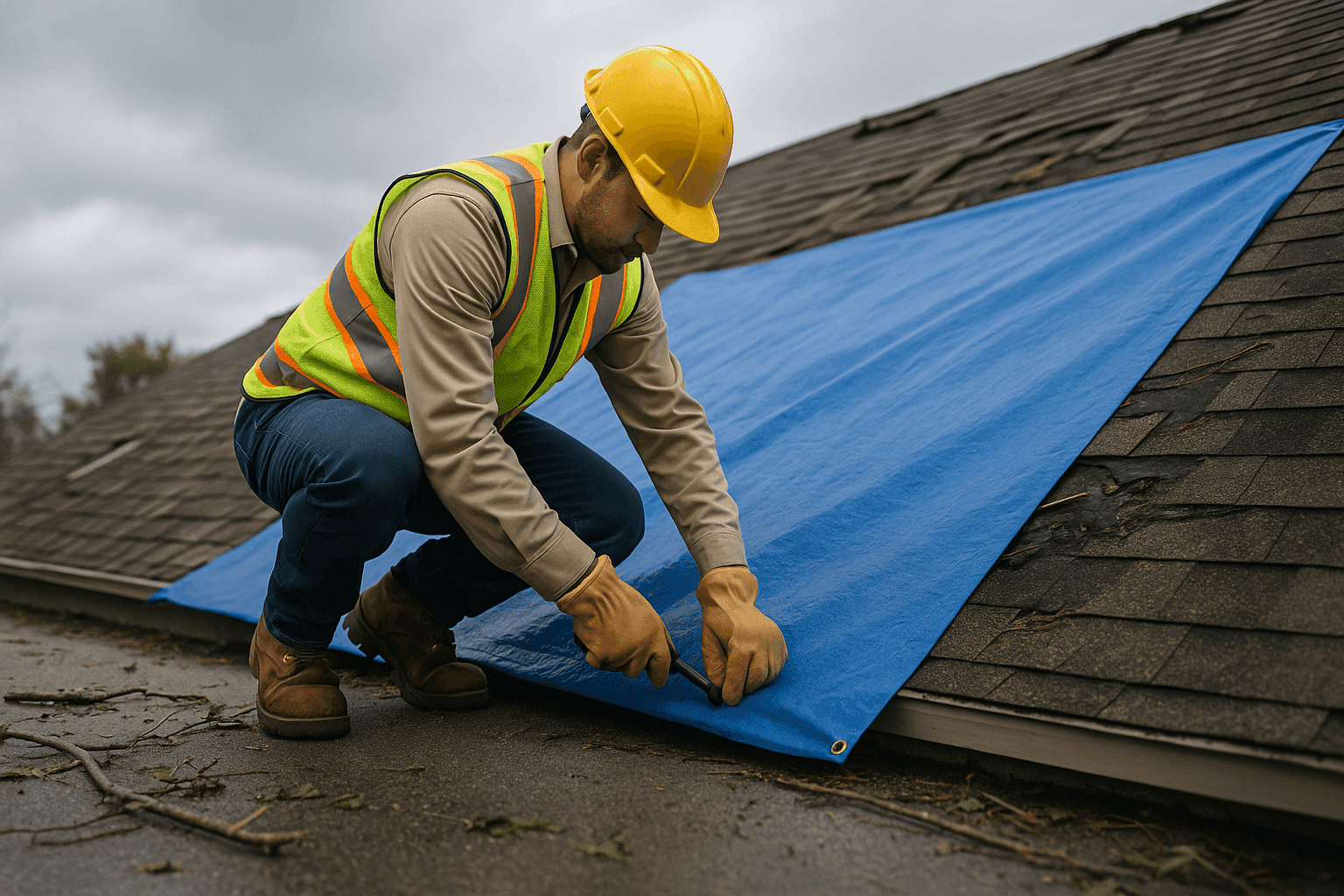
If the forecast calls for more rain, you need a quick patch. A tarp stretched over exposed decking, secured outside the damaged zone, can keep water out—temporarily. Duct tape, plastic sheeting, or even buckets under leaks can buy precious time.
- Only climb onto your roof if you’re confident it’s safe and dry. Wet shingles are as slippery as ice.
- Use heavy objects (bricks, boards) to secure tarps—never nails or screws through the roof unless you know what you’re doing.
- Apply roof sealant or caulk to small cracks if accessible from the attic or eaves.
These are stopgaps, not solutions. As soon as possible, call a professional for thorough inspection and repair.
Navigating Insurance Claims
Dealing with insurance can feel like speaking another language. Here’s how to make it work for you:
- Contact your insurer as soon as you can. Most policies require prompt notification.
- Provide your photos and a written list of damages.
- Ask about “emergency mitigation”—many adjusters will approve temporary repairs to prevent further loss.
- Keep receipts for any materials or emergency work done.
Remember: insurance adjusters may not catch every issue. Having your own documentation and a licensed roofing contractor’s assessment adds weight to your claim.
Choosing a Restoration Contractor
Not all contractors are created equal. After a storm, “storm chasers” sometimes appear, offering quick fixes at suspiciously low prices. Protect yourself:
- Verify licenses and insurance. Reputable roofing contractors carry state-required credentials.
- Ask for references and recent local job addresses.
- Ensure they have experience with storm damage restoration, not just new construction.
- Look for expertise in services like Ventilation & Insulation near you, Emergency Services, Structural Repair, and Leak Repair.
A dedicated contractor won’t rush you into signing or demand large upfront payments. Take your time and choose someone who listens to your concerns.
Problem: Storms Don’t Wait—And Neither Should You
Storms don’t make appointments. They arrive at midnight, on holidays, in the middle of winter. That’s why acting quickly—without panicking—is key. The longer a roof stays exposed, the more moisture seeps in, weakening decking, insulation, even framing. Water loves to find a way in, and it rarely stops at one drip.
Quick Safety Checklist
- Is there visible structural damage? (Walls, roofline, chimney)
- Are there downed power lines or electrical hazards?
- Is water leaking inside? (Ceiling stains, wet insulation, puddles)
- Are shingles, tiles, or metal panels missing?
- Are gutters or downspouts detached?
- Does the roof look uneven or sagging?
- Any loose debris or broken glass around the property?
If you answer “yes” to any, stay clear and get help. Your safety always comes first.
DIY vs. Call a Pro
It’s tempting to grab a ladder and get to work. Sometimes, that’s all you can do. But remember:
- Roofs are dangerous, especially after storms. Wet, unstable surfaces can lead to serious injury.
- DIY fixes (like tarping or minor sealant application) should be temporary.
- For anything involving structural repair, electrical hazards, or major leaks, call a professional.
A pro brings the right tools, materials, and—most importantly—knows how to keep themselves (and your home) safe.
What Pros Do On Arrival
When Home Roofing & Remodeling arrives, here’s what you can expect:
- Full inspection, inside and out: attic, decking, shingles, flashing, gutters, chimney, and skylights.
- Photo documentation of every area—just like an insurance adjuster.
- Emergency stabilization: tarps, sealants, or temporary bracing if needed.
- Detailed explanation of needed repairs or replacement options.
- Honest recommendations: sometimes a patch is enough; other times, full roof replacement or structural repair is required.
- Guidance through the insurance claim process, using industry standards and code references (like those from the National Roofing Contractors Association and local building codes).
Prevention & Maintenance
Storms are unpredictable, but you can reduce risk:
- Schedule annual roof inspections (fall is ideal before winter storms).
- Keep gutters, downspouts, and roof valleys clear of leaves and debris.
- Replace worn or missing shingles/tiles.
- Check attic insulation and ventilation—trapped moisture can rot wood from the inside out.
- Trim tree branches overhanging the roof.
- Upgrade flashing around chimneys, skylights, and roof valleys.
- Use quality sealants and coatings suited for your climate.
Proactive maintenance is like wearing a raincoat—you may not stop the storm, but you’ll keep dry underneath.
Costs & Time Factors
Storm damage restoration costs vary as widely as the weather itself. Some factors:
- Scope of damage (missing shingles vs. structural collapse)
- Material type (shingle, tile, metal, flat roof)
- Accessibility (steep roofs or multi-story homes take longer)
- Emergency response needs (after-hours calls may cost more)
Repairs can take a few hours (simple patches) to several days (full replacement, decking repair, or extensive insulation/drainage work). Insurance can speed or slow this process—having your documentation ready helps.
When It’s an Emergency
Some situations can’t wait:
- Major leaks during ongoing storms
- Partial roof collapse or structural compromise
- Electrical hazards near water intrusion
- Large sections of missing roofing exposing living space
If you’re unsure, err on the side of caution. Call emergency services, then a roofing professional with experience in Emergency Services, Leak Repair, and Roof Flashing Repair. Quick action now prevents bigger headaches later.
FAQ
How do I know if my roof is safe after a storm?
If you see sagging, cracks, or new leaks, or if ceilings bulge or discolor, assume it’s not safe. Avoid the area and get it inspected.
Will insurance cover my storm damage?
Most homeowner policies cover wind, hail, and storm-related roof damage, but coverage varies. Report damage promptly, provide documentation, and consult your policy.
Should I repair or replace my roof after storm damage?
Minor damage (a few shingles or flashing) can be repaired. Extensive damage, especially if there’s water intrusion or structural issues, may require replacement. A professional inspection will clarify.
How soon should I act after a storm?
Immediately. Even small leaks can cause big problems if left unchecked. Temporary protection is a must if repairs can’t be made right away.
Local & Seasonal Considerations
Storms don’t play favorites. Whether you’re bracing for hurricanes, tornadoes, or heavy winter ice, being prepared matters:
- In hurricane zones, secure loose outdoor items and check attic vents.
- For tornado-prone areas, consider impact-resistant roofing.
- In snowy climates, watch for ice dams—clear gutters and check ventilation.
- After any major storm, schedule a professional inspection, even if damage isn’t visible.
Homeowner’s Post-Storm Checklist
- [ ] Ensure everyone is safe and avoid hazards.
- [ ] Document all visible damage (photos, notes).
- [ ] Apply temporary protection—tarps, sealants—if safe.
- [ ] Contact your insurance company.
- [ ] Arrange for a professional roof inspection and assessment.
- [ ] Save receipts for all emergency work or materials.
- [ ] Schedule repairs or replacement promptly to avoid further damage.
- [ ] Plan for ongoing maintenance—clean gutters, trim trees, and inspect annually.
Storm damage is stressful, but you don’t have to face it alone. Home Roofing & Remodeling is here to help with everything from Ventilation & Insulation near you to emergency roof repair and replacement. Your roof is your home’s first defense—let’s keep it strong, together.
Call Home Roofing & Remodeling now — or reach us anytime at 888-896-7236 .